{
“title”: “Why Virtual Reality is the Future of Scientific R&D”,
“meta_description”: “Discover how Virtual Reality is revolutionizing scientific research, from molecular modeling to complex data visualization. Unlock new frontiers in innovation.”,
“tags”: [“Virtual Reality in Science”, “Scientific Research Tools”, “Data Visualization”, “High Performance Research”, “Technological Innovation”],
“categories”: [“Science”, “Technology”],
“body”: “
The Cognitive Shift in Scientific Discovery
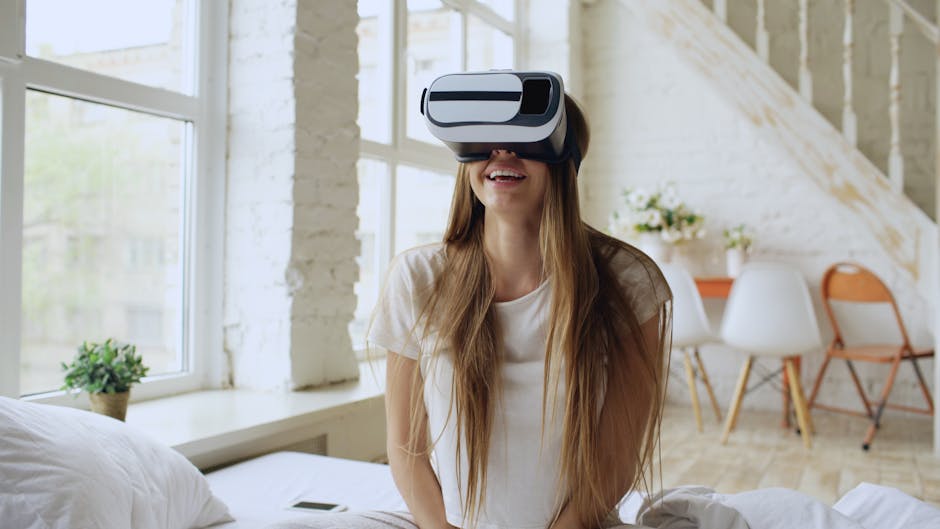
Modern science suffers from a visualization bottleneck. Researchers are increasingly forced to interpret multi-dimensional data sets through the flattened constraints of a two-dimensional monitor. This cognitive overhead limits the ability to perceive spatial patterns, molecular interactions, and fluid dynamics, effectively capping the rate of discovery. Virtual reality (VR) eliminates this friction, transforming raw data into immersive environments where intuition meets computational power.
Molecular Manipulation and Structural Biology
In structural biology, understanding how proteins fold or how ligands dock with receptors is an exercise in complex geometry. Historically, this required heavy reliance on physical models or abstract 2D projections. Today, VR platforms allow biochemists to step inside a protein structure. By manipulating atoms in real-time, researchers achieve a visceral understanding of bond angles and steric hindrance that a screen simply cannot provide. This creates a superior framework for strategic drug discovery, reducing the reliance on trial-and-error laboratory synthesis.
Accelerating Data Analysis through Spatial Intelligence
High-performance research requires rapid decision-making based on massive, non-linear data sets. When a scientist can walk through a visual representation of a galaxy’s evolution or a climate model, they leverage human spatial reasoning—an evolutionary advantage that remains underutilized in academic computing. By mapping data points to physical space, the brain identifies outliers and correlations that are invisible in traditional spreadsheet analysis. This shift is fundamentally an operational transformation in how laboratories process information.
Bridging the Gap Between Simulation and Execution
The most sophisticated AI models often struggle to communicate their findings to the human stakeholders responsible for implementation. VR acts as an interpretive layer, translating complex algorithmic outputs into observable phenomena. This allows for rigorous pre-testing of hypotheses in a low-cost, digital environment before committing to expensive physical experiments. It is the ultimate tool for de-risking high-stakes research.
Cultivating High-Performance Scientific Teams
Collaboration has historically been bound by physical proximity or static digital conferencing. VR changes this by enabling a shared, three-dimensional workspace for remote teams. When specialists from global institutions work on a shared digital twin of a complex system, the efficiency gains are substantial. This capability supports a new model of scientific leadership, where the focus shifts from managing logistics to orchestrating complex, distributed innovation cycles. For deeper insights into scaling organizational performance, explore The BossMind network.







Leave a Reply